




Jeep Flat Towing Guide
Flat-Towing Jeep SUVs
Flat-towing is a staple of the RV life — and new Jeep SUVs like the Wrangler are some of the most popular vehicles for flat-towing. Why? Thank their robust design that makes it easy to hitch one up behind your motorhome and hit the road.
To help shed some light on which Jeep SUVs can be flat-towed and how to do it, we’re outlining all the models capable of this RV-friendly feature. Check it out, then give our Jeep dealer in Jefferson City a call to learn more.
What Is Flat-Towing?
Simply put, it’s flat-towing is when you tow a car directly behind another vehicle without the use of a trailer or dolly. All four wheels of the vehicle being towed are on the pavement at all times. It’s a common towing method used by RV owners looking to bring their vehicle with them to the campsite, but can cause severe damage if done incorrectly. Following all manufacturer recommendations is imperative if you want your car to arrive in one piece after being flat-towed. Pro Tip: Before investing the time and money into a flat-tow setup, always double-check your owner’s manual to make sure your vehicle is actually designed for flat-towing. Attempting to tow a vehicle that isn’t approved by the manufacturer could void your warranty—or worse, result in costly damage to your car (and possibly your RV setup, too). Taking a few minutes to verify this information up front is crucial for protecting both your ride and your peace of mind.
Best New Jeep SUVs for Flat-Towing
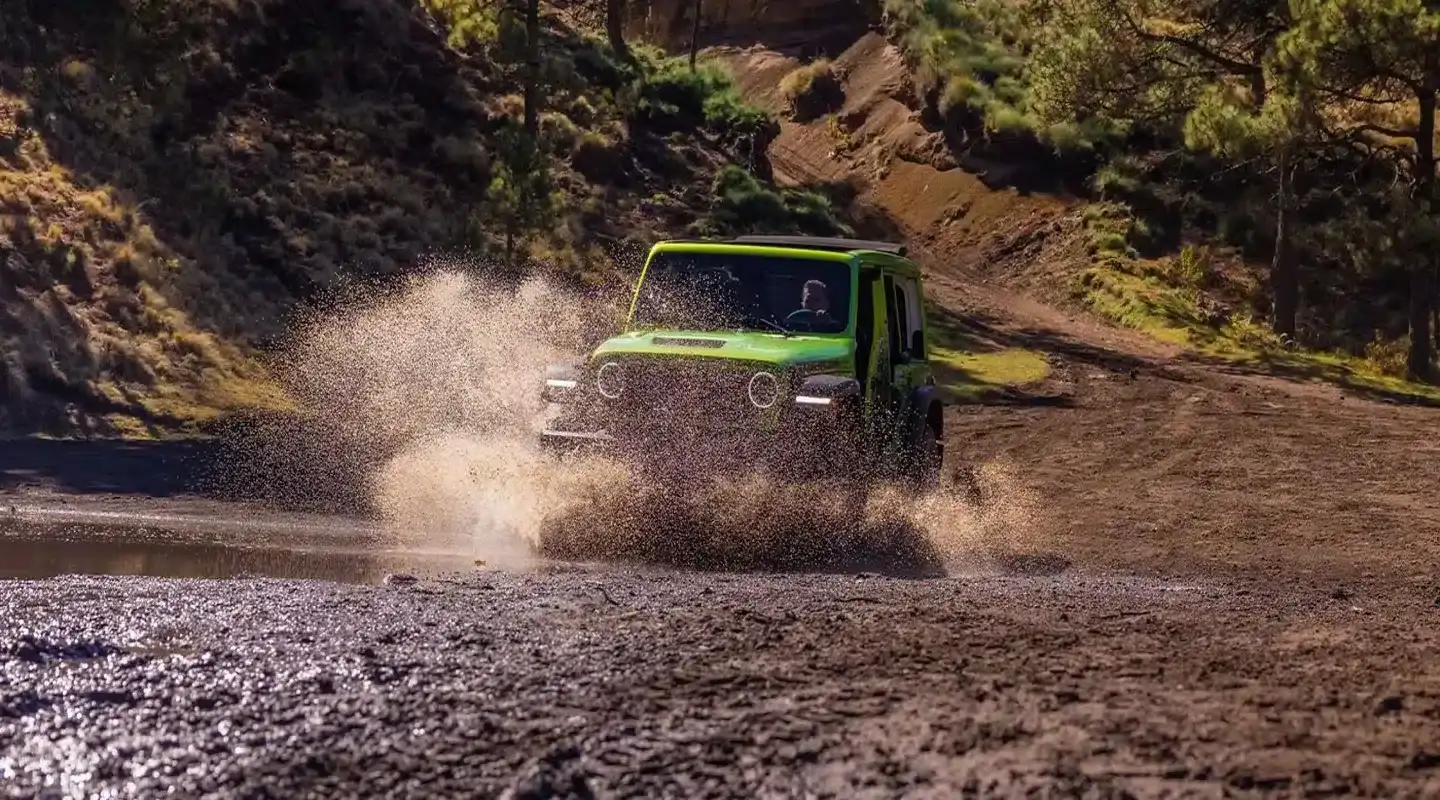
Jeep Wrangler
The new Jeep Wrangler is probably the most popular choice among cars that can be flat-towed. Why? Because it’s easy to safely prepare a Wrangler for a worry-free highway journey behind your RV. In fact, flat-towing capability has long been a staple of the Wrangler’s design—with all Wrangler models from 1992 through 2022 officially endorsed for flat-towing. That means whether you’re driving the latest model or rolling with a seasoned classic, your Wrangler is ready to follow your RV wherever adventure calls. Here’s how to do it, directly from the Wrangler owner’s manual:
- Shift the automatic transmission to Park (for manual-transmission models, put into gear)
- Shift transfer case to Neutral
- Tow in a forward direction
With its rugged engineering and a long history of flat-tow compatibility, the Wrangler gives you peace of mind—so you can focus on making memories at your next destination.
Jeep Grand Cherokee
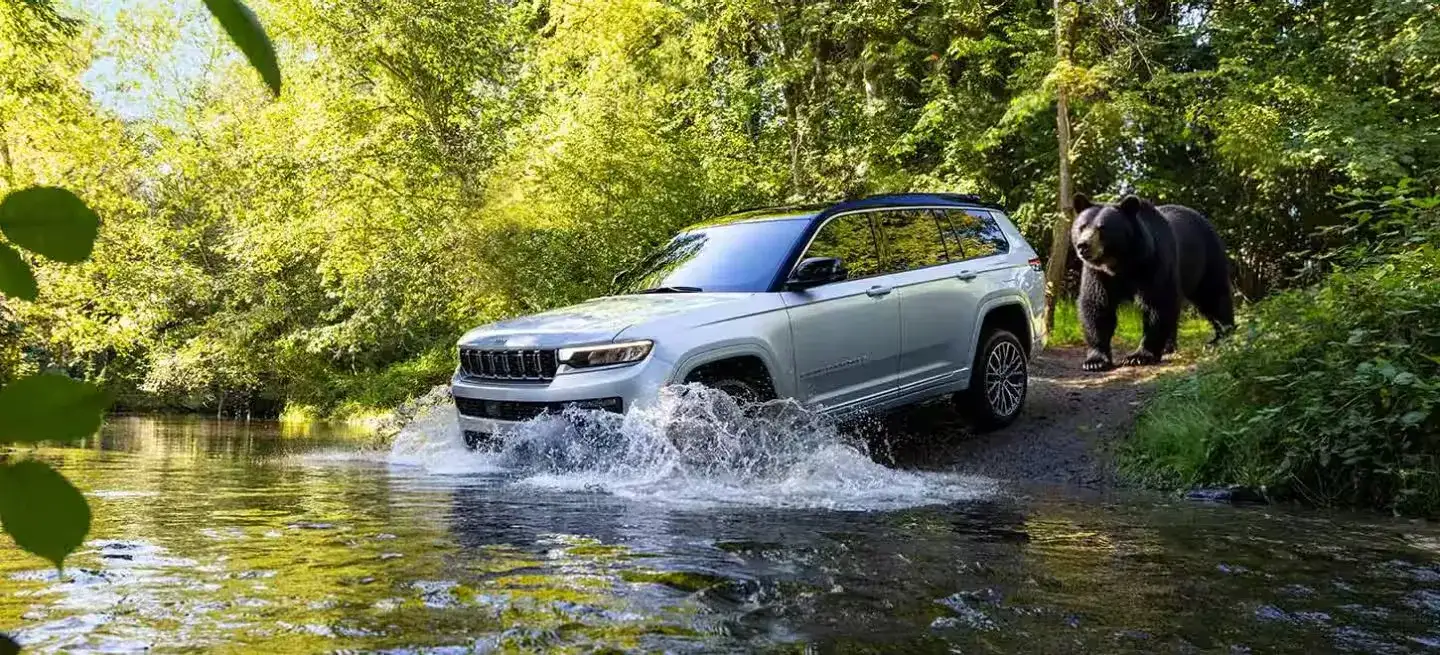
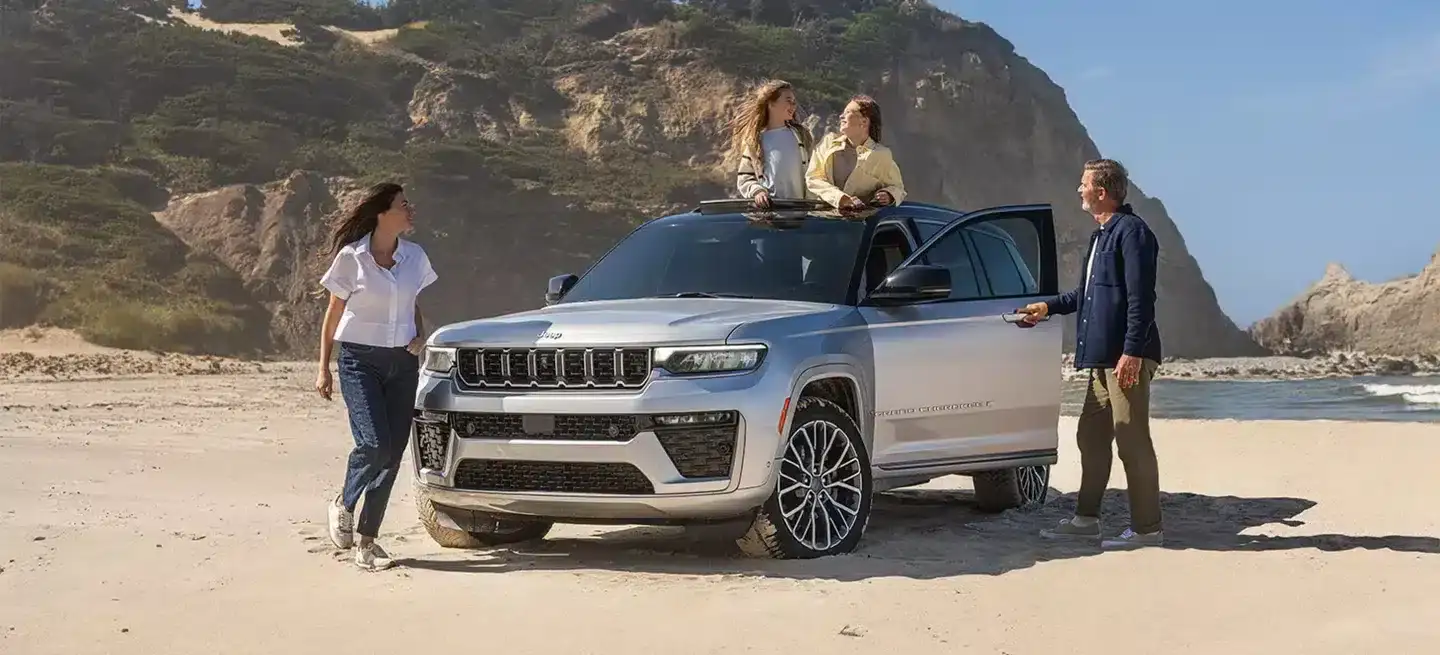
If you want to bring a touch of luxury to the RV park, you’ll be happy to know that you can flat-tow a new Jeep Grand Cherokee that’s properly equipped. Note that you’ll only be able to do this with models that offer 4WD Low, so don’t try this with any other drivetrain variation. If you do have a Grand Cherokee with a 4WD Low setting, here’s how you can set it up for flat-towing:
- Shift the automatic transmission to Park
- If equipped with variable ride height, set to normal position
- Shift transfer case to Neutral
- Tow in a forward direction
Jeep Gladiator
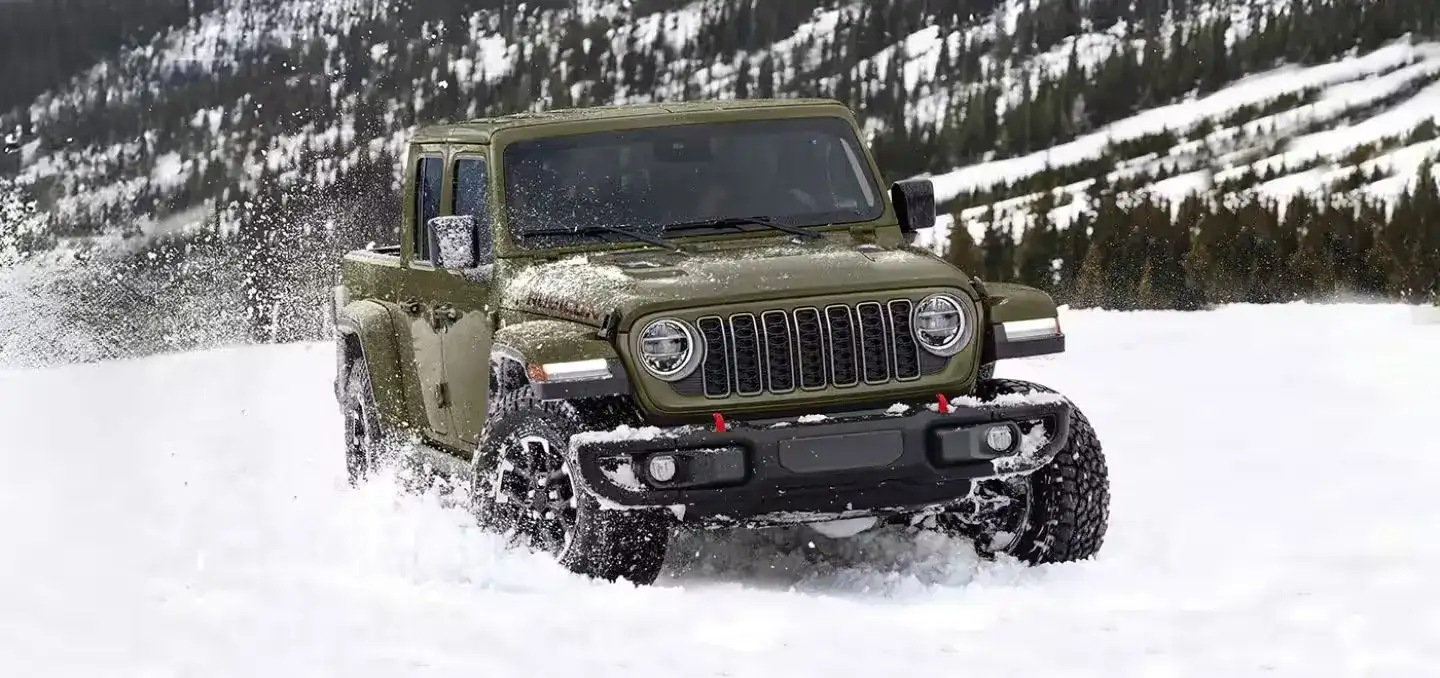
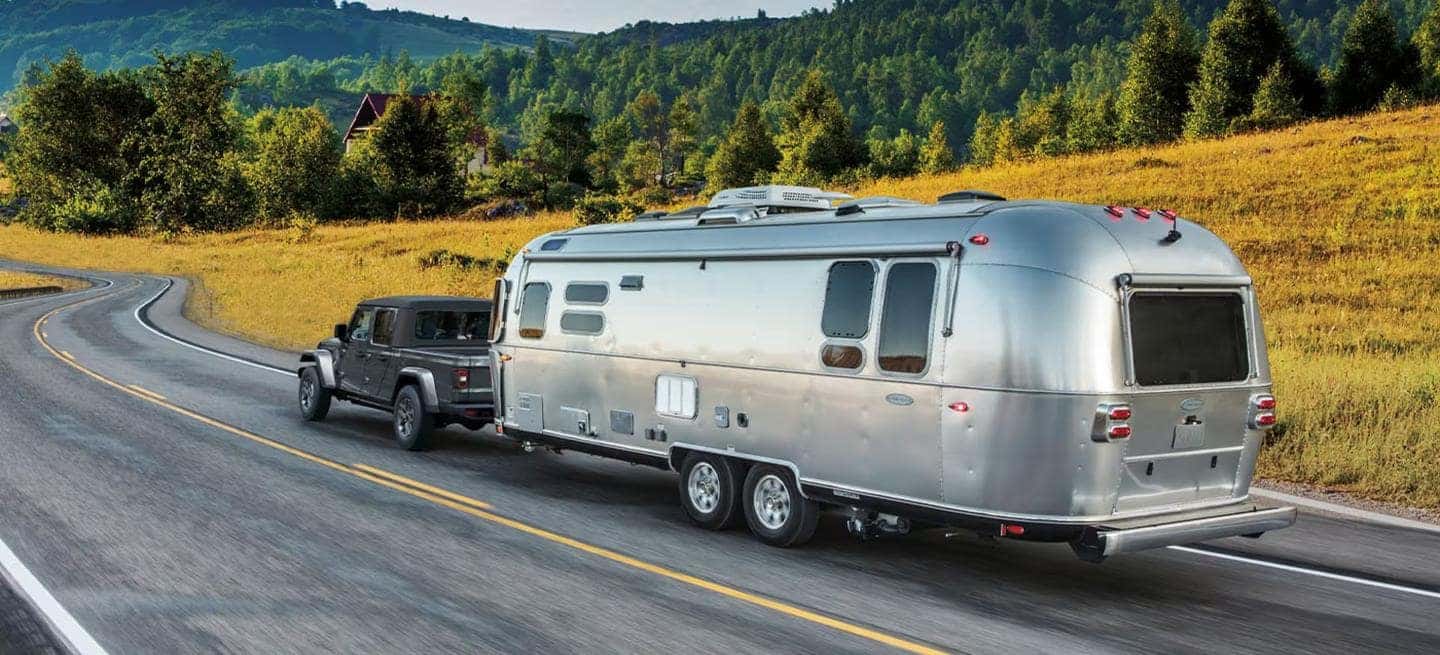
Love the go-anywhere Wrangler but really want a pickup truck? Meet the new Jeep Gladiator. It’s all Jeep, all the way — only now with an added dose of practicality thanks to its cargo bed. Because it offers true 4WD with a low range, you can flat-tow a Gladiator that’s so equipped. Here’s how:
- Shift the automatic transmission to Park
- Shift transfer case to Neutral
- Tow in a forward direction.
A Word of Caution Before Flat-Towing
Before towing, check your owner’s manual to follow the procedure for correctly shifting the transfer case into Neutral while the transmission is in Park. Remember that only models with a 4WD Low setting are endorsed for flat-towing — all other drivetrain configurations should be towed in compliance with what’s recommended by the manufacturer. Failure to follow any of the manufacturer or owner’s manual guidelines can result in severe drivetrain damage, so proceed with caution.
Contact Capital City Chrysler Dodge Jeep Ram Today
Have more questions about flat-towing a Jeep in Missouri? Reach out. We can share details about what it is, how to do it and the safety precautions you’ll want to follow before hitting the road. Once you contact Capital City Chrysler Dodge Jeep Ram, you’ll see how easy it is to bring your beloved Jeep to the campsite with you — no trailer needed.
Jeep Flat-Towing Frequently Asked Questions
Can you flat tow a Jeep Renegade?
Thinking about bringing your Jeep Renegade along for the adventure? Unfortunately, this is where we have to tap the brakes. While you might spot a Renegade tagging along behind a motorhome from time to time, it’s important to know that flat-towing a Jeep Renegade is not permitted by the manufacturer. Attempting to do so can result in serious drivetrain damage, even if it seems like it’s working just fine at first glance. If your heart is set on exploring with a Renegade, you’ll need to consider alternative towing options, such as a trailer or flatbed. Always refer to your owner’s manual—and if you have questions about which Jeeps are ideal for RV life, our team is happy to help you choose a model built for easy, stress-free flat-towing.
Are there certain Jeep models that require modifications, such as removing the driveshaft, before flat towing?
Is it safe to flat tow a Jeep if you see others doing it, even if the manufacturer prohibits it?
Just because you spot someone towing a Jeep behind their RV doesn’t mean it’s safe—or even allowed. Not every Jeep SUV is designed for flat-towing, and choosing to ignore the owner’s manual or manufacturer guidelines can lead to serious mechanical damage and safety hazards. For example, while the Wrangler is a flat-towing favorite, other models like the Jeep Renegade are strictly off-limits for this method. So, it’s always crucial to double-check the manufacturer’s recommendations for your specific model. If flat-towing isn’t approved, attempting it could spell disaster for your transmission, drivetrain, and warranty—not to mention your peace of mind. Stick with Jeeps that are officially flat-tow ready, and never assume it’s safe just because you see it on the open road. When in doubt, a quick call to your dealership or a look through your owner’s manual is always the best move.
What equipment do I need to flat-tow my Jeep safely?
- Tow Bar – This heavy-duty connector links your Jeep securely to your RV.
- Base Plates – Custom-fitted brackets attach to your Jeep’s frame, giving you a reliable mounting point for the tow bar.
- Safety Cables – These act as a backup connection, keeping your vehicle attached if the main tow bar ever fails.
- Wiring Kit – Essential for synchronizing your Jeep’s brake lights, turn signals, and running lights with your motorhome for everyone’s safety on the road.
- Supplemental Braking System – Required in most states, this system applies your Jeep’s brakes when your RV slows down, reducing stopping distance and strain on the towing rig.
- High-Low Adapter (if needed) – Keeps your tow bar level, especially if your RV and Jeep sit at different heights.
Each piece plays a crucial role in making sure your flat-towing setup is safe and compliant with the law. Always double-check compatibility with your exact Jeep model before purchasing equipment or heading out on your next adventure!
Why might you need to disconnect the battery when flat towing a vehicle?
If you’ve ever wondered why some guides recommend disconnecting your vehicle’s battery before flat-towing, it all comes down to protecting your ride (and your sanity at the campsite). Leaving the battery connected can allow certain electrical systems to stay active—like security features, electronics, or lights—which may quietly drain power as you travel. The last thing you want after a relaxing drive is to arrive at your destination and discover a dead battery before the adventure even begins. By disconnecting the battery—following the advice of your manufacturer—you ensure that unnecessary systems remain off, safeguarding the battery’s charge for when you need it most. Always double-check your Jeep’s owner’s manual for the latest recommendations specific to your model, as requirements may vary.
What is the approximate curb weight of various flat towable Jeep models?
Wondering how much weight you’ll be pulling behind your RV? Here’s a quick look at estimated curb weights for popular Jeep SUVs frequently chosen for flat-towing:
- Jeep Cherokee (select model years, 4WD only): Around 5,960 to 6,230 pounds
- Jeep Commander (Quadra-Trac II/Quadra Drive II 4WD): Approximately 4,591 to 5,185 pounds
- Jeep Compass (manual transmission only): Typically 4,650 to 4,750 pounds
- Jeep Grand Cherokee (Quadra-Trac II/Quadra Drive II 4WD): Roughly 4,238 to 4,784 pounds
- Jeep Gladiator (all models): About 4,650 to 5,050 pounds
- Jeep Grand Wagoneer (4WD with low range): In the range of 6,340 to 6,420 pounds
- Jeep Liberty (4WD only): Usually 4,076 to 4,290 pounds
- Jeep Patriot (manual transmission only): Between 3,136 and 3,331 pounds
- Jeep Wagoneer (4WD with low range): Around 5,960 to 6,230 pounds
- Jeep Wrangler (all models): Anywhere from 3,948 to 5,098 pounds